The 2014 Asia-Pacific Chiropractic Doctors Federation meeting in Manila had been uneventful, the papers had been put away and it was playtime. Our generous hosts had contacted the local tourist organisation, collected the requisite amount of Philippine pesos, told us to gather in the hotel lobby and be sure to have signed the necessary disclaimer.
Disclaimer? Ok, I knew that the twelfth most populous city on the planet could be dodgy in parts, but we’d been told we were heading to a nature reserve, an area of outstanding beauty outside the boundaries of this bustling squirming city. What could possibly go wrong?
As we shoehorned ourselves into the battle-scarred minibus and edged into the craziness of permanent-rush hour Manila traffic, I was abruptly reminded of my journey from the airport. Having been disgorged from Ninoy Aquino International into the stifling, sticky heat of the Manila night, ancient, beaten taxis had jostled for business, weaving between uniformed staff and overloaded luggage trolleys being painfully manoeuvred by exhausted tourists. Dazed, onesie-clad children had trailed unsteadily behind, their red eyes a testament to the 24 hour endurance exercise that had long since ceased to be exciting and was now a battle against unconsciousness.
With some trepidation, I had climbed into my two-speed taxi (stationary and maximum velocity) and had been propelled into the city centre amid a cacophony of high-revving engines, relentless horn-tooting and a stream of what I understood to be Tagalog profanity. Despite the late hour, multi-coloured lights of still-open bars, clubs and massage parlours had twinkled and flashed provocatively as I had been unceremoniously catapulted towards my destination.
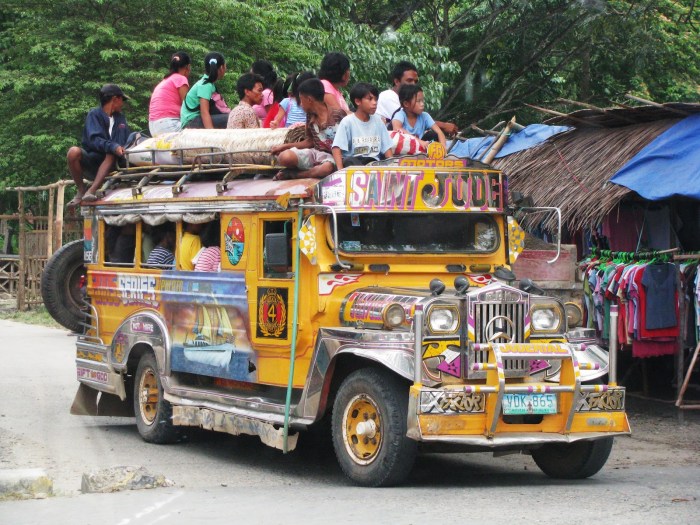
I was now back in the thick of Manila’s over-clogged roadways. Our mild-mannered Mazda competed with habel-habels (improvised motorcycle taxis carrying up to 10 people and their baggage) and Jeepneys (pimped WW2 jeeps converted into chrome-plastered human sardine cans). As we idled in stationary traffic, a psychedelic message sprayed onto the rear of one of these bling-bedecked monsters proclaimed ‘God Is Good’. Catching sight of 30 or so faces pressed against the glass, with a similar number clinging to the roof, I quickly realised why faith was so important to the Filipino population.
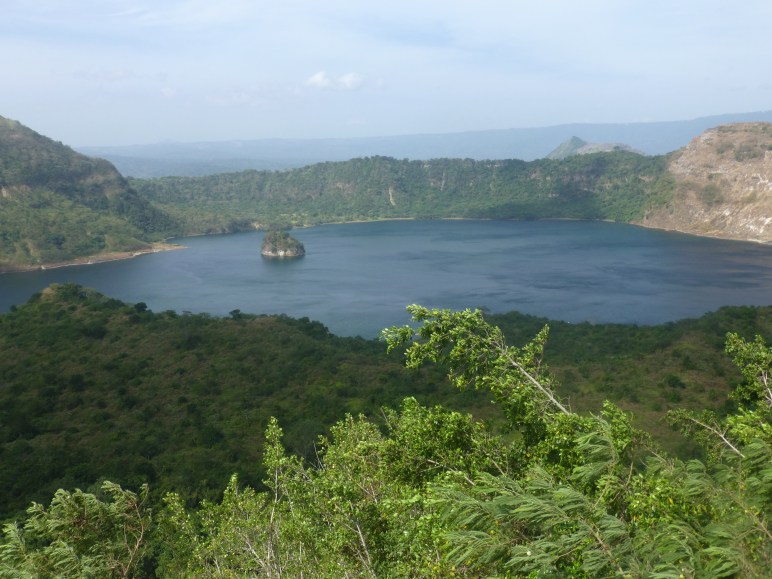
As high-rise apartment and office blocks gave way to the suburbs and then the countryside, we arrived about an hour later at our picturesque destination. Our driver proudly announced that we were now at Taal, one of the most active volcanic sites in the world and a designated Permanent Danger Zone. The reason for the disclaimer became clearer by the minute.
First stop was a mini-lecture where the carnage from the thirty-plus previous erup
tions was graphically described. After some fortifying local delicacies it was time for us to get up close and dangerous to the phenomenon of the Taal volcano complex.
Taal is pretty unique. Prehistoric eruptions have created a volcano within a lake, within which is another lake, within which is yet another volcano. It is the Russian doll of volcanology and our journey was to take us to the innermost one.
The prize of seeing this spectacle was, however, not to be easily won. To reach Taal there, we first had to cross the formidably large outer lake. With our group divided into two, we were led towards two rather fragile-looking craft, whose buoyancy was bolstered with lengths of bamboo lashed to their sides. The phut-phutting from the rear of the boats gave every indication they were powered by the motors of old sewing machines.
With safety clearly foremost in the minds of our crew, it was time to distribute the life vests. As I was handed my fluorescent flotation aid and the 10cc engines fired up I realised that they had probably been bought as a job lot from a Hobbit community. As I donned the vest, the polystyrene blocks designed to cover my chest stopped at the point of my shoulder blades, leaving me to fashion a bow from the two frayed lengths of string that only came remotely close to each other after ensuring that both lungs and my abdominal cavity were made completely devoid of air. As I watched my fellow tourists grapple with their own vests we wobbled our way into our respective seats and with that, we were off.

With the shoreline quickly disappearing from view, the realisation struck that I was now in the middle of a very deep lake, heading towards a volcano with a sizable track record in eruption, and only a miniscule life jacket for protection. However, our beaming crew clearly had not a care in the world and a few short minutes later we spied the shore where our welcoming committee awaited our arrival.
Disembarking from the boats and returning our homeopathic orange safety garments, we were ready for the next leg of our trek to the crater’s edge. Eight saddled ponies of various colours stood on the sand, each accompanied by a guide. The outer Taal volcano loomed before us.
Any suggestion of equestrian expertise on my part would be a gross overstatement. Childhood memories of precariously bobbing on an ageing donkey at Weston-Super-Mare beach came flooding back, but not wishing to appear anything but an accomplished jockey I strode confidently towards my nominated pony.Having sized me up in a ‘WTF’ sort of way, his eyes bulged, betraying obvious terror at what was about to ensue.
Moderately surprised that my foot could even reach the stirrup, I set about mounting my trusty steed. Admittedly, the tack was not filling me with confidence, but I was not ready for what happened next. As I pushed down on the stirrup, my foot went straight through it and my world went black as my nosed smashed against my pony’s ribcage. My immediate embarrassment was compounded by having to spit out mouthfuls of pony hair.
To a backdrop of schoolboy giggling from the assembled villagers, I dusted myself down and was led to a nearby rock from which I launched myself onto the back of the now quivering pony. Recovering from this rather inelegant incident, I soon caught up with the rest of the team and as we plodded through the village, waving at excited children and weaving between ramshackle huts, I soon regained my composure.
That is, until we began to ascend. With only one stirrup and my other leg dangling uselessly, it was left to my inner thigh muscles to keep me astride. On the level this was bearable, but as we headed up the grossly uneven terrain and increasingly steep gradient towards the summit, I could feel my grip loosening. Before I knew it, my saddle was sliding backwards and with horror I found my crotch directly over the poor animal’s backside. By this time, my thighs were on fire and I was having to launch myself forward every few metres just to stay on. As sweat trickled down my face, my pony stumbled on, but even his breathing was starting to become laboured and I wondered how much longer he could go on.

Finally, we made it to the crater’s edge. My pony was whisked away, presumably for rehydration and CPR, while I attempted to re-establish circulation in my lower limbs. As we admired the spectacular view of Vulcan Point, the innermost volcano, I remained distracted by the inglorious circumstances of my unconventional ascent.
Stopping briefly to pose for photographs, all too soon it was time to descend from our vantage point. Partially revived, my pony sensed an imminent repeat of the nightmare experience of carrying my ample frame. The poor thing looked terrified. This time it was the downhill gradient that I had to contend with. Setting off, we were soon picking our way down the rocky road to the comfort of the village below.
I still had only one stirrup. The saddle was still wobbly, as was I. As my body slid helplessly forward, rather than being over its behind I found myself straddling its mane. Trying desperately to remember how Ricky remained connected to a saddleless Champion the Wonder Horse, my exhausted thigh muscles were again called into action. The descent was equally as distressing as the ascent.
As we reached the shore once more, new boats were moored ready for our departure. Children scampered about excitedly and two young boys hopped aboard my boat, settling themselves into the rearmost seat. The boys flashed me a huge white grin and gave me the thumbs-up as I once again inhaled as deeply as I could, donned my micro-jacket and offered myself a small prayer.
By this time, the wind had got up and the waters were choppy. Waves buffeted our little boats and we soon became drenched. Time after time, our fragile boat rose up on the waves before crashing down to continue ploughing through the water. Neck and neck with the second boat, I cast a glance across to see that its occupants too had become soaked.
But there was something else. As I looked across, I caught something out of the corner of my eye. The two boys behind me were no longer perched on the seats but had been galvanised into action, furiously emptying the now leaking boat with small cups. The shore was still not within sight, the previously cloudless sky had turned a dark shade of grey, and we were perilously bobbing about at the mercy of the waves. And here was I, protected only by a bright orange fashion accessory, whose only utility was to cushion my scapulae. The only vague reassurance was that the boys were still grinning.
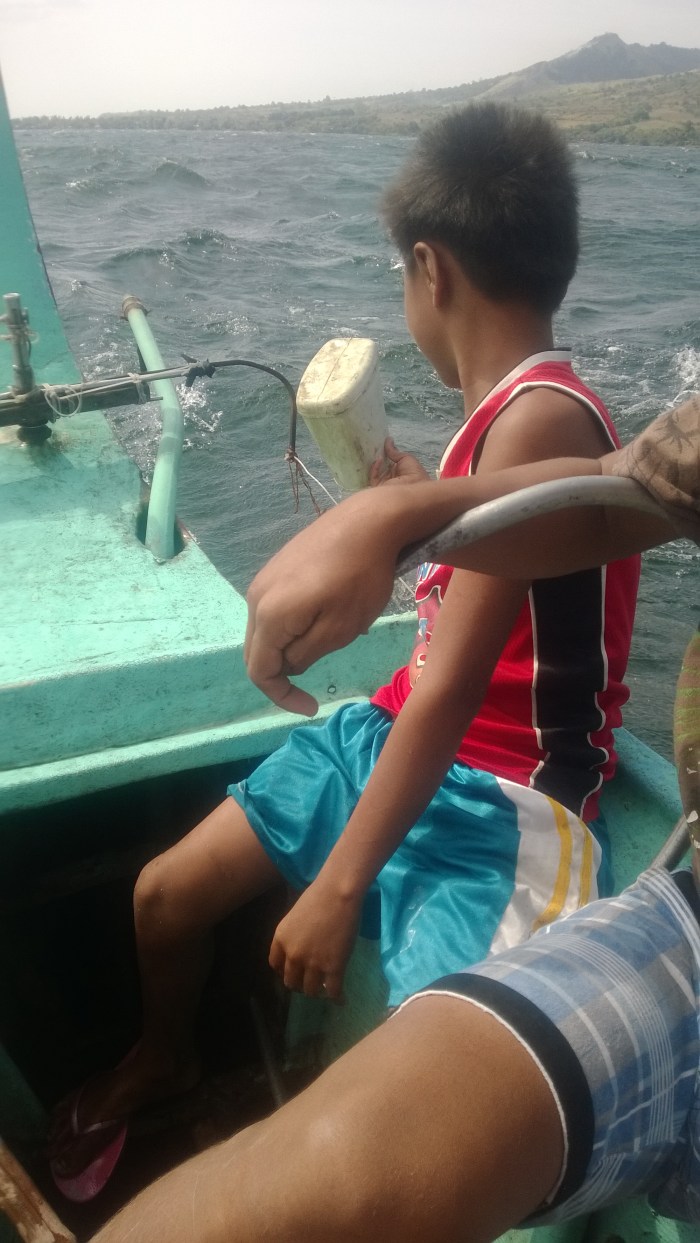
As the sewing machine motor propelled us through the water at what now seemed to be an agonisingly slow pace, the small harbour eventually came into view. Conversation by this stage had quietened somewhat as we all willed ourselves to reach the comfort of dry land.
Our fears, of course, were wholly unwarranted. As we reached the harbour and stepped from the boat, our two most junior crew were still decanting lake water, but no one seemed remotely bothered. Before long, we were back on the road heading back into the traffic chaos of Manila. Our adventure was over. We’d made it to the summit of the Taal volcano and had lived to tell the tale.
All too soon, my time in the Philippines was over and the following morning I was heading back to Heathrow. For days, the residual burning ache in my legs served as a telling reminder of my brief career as a Filipino cavalryman. Did my poor pony every carry a passenger again? I prayed that someone had taken pity and allowed him to live out his days in tranquil retirement. Hopefully, an equine chiropractor had come to the rescue and put his traumatised spine back together, coupled with visits to a horse-whispering psychologist with a special interest in PTSD.
And, somewhere in that remote settlement at the foot of this iconic volcano, I’m sure that laughter still echoes long into the night as Filipino storytellers entertain villagers with tales of the day an oversized Englishman came to Taal and fell hook, line and sinker for the old broken stirrup and dodgy saddle trick.
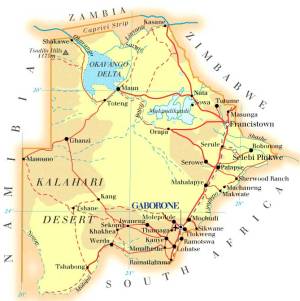 tographically impaired, acquiring a sound knowledge of Botswana’s road network presents few challenges. Huge swathes of the country are devoid of mapped roads and, courtesy of the semi-arid Kalahari Desert, sitting astride Botswana and Namibia, most of its population is located in towns and cities out to the east.
 n of numerous shuttle trips to Gaborone and showing enough kilometres on the clock to circumnavigate the globe ten times, the Prado fired up on the first turn of the key, a small puff of black smoke signalling its readiness for the journey ahead. Bouncing along the dusty track in the relative coolness of the early morning, sun streaming through the windows, we headed towards the A1, passing on our way the disastrously mis-spelt Look n’Lean Nursery School.
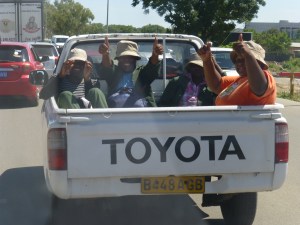 As the traffic funnelled into Francistown, we were forced to slow as roadworks diverted us off the A1 and into the residential suburbs. As we bounced over pothole-filled roads and weaved through the rabbit warren of back roads, long strings of brightly coloured, freshly laundered clothes marked the perimeters of yards, proudly swept and containing small but neat single storey houses. Lowering the window of the Prado, the air was filled with a cacophony of sound: car horns hooting, roosters crowing, dogs barking, goats bleating and the magical sound of Setswana, as the locals made themselves heard above the din.
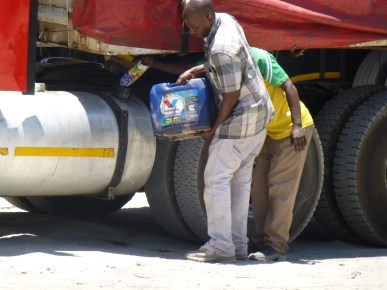 from a distance, two young men were filling the tank of a freight lorry. There were not uniformed attendants here. Having fashioned a funnel from a plastic bottle they were decanting fuel into its huge tank. I think they are probably still there filling it up.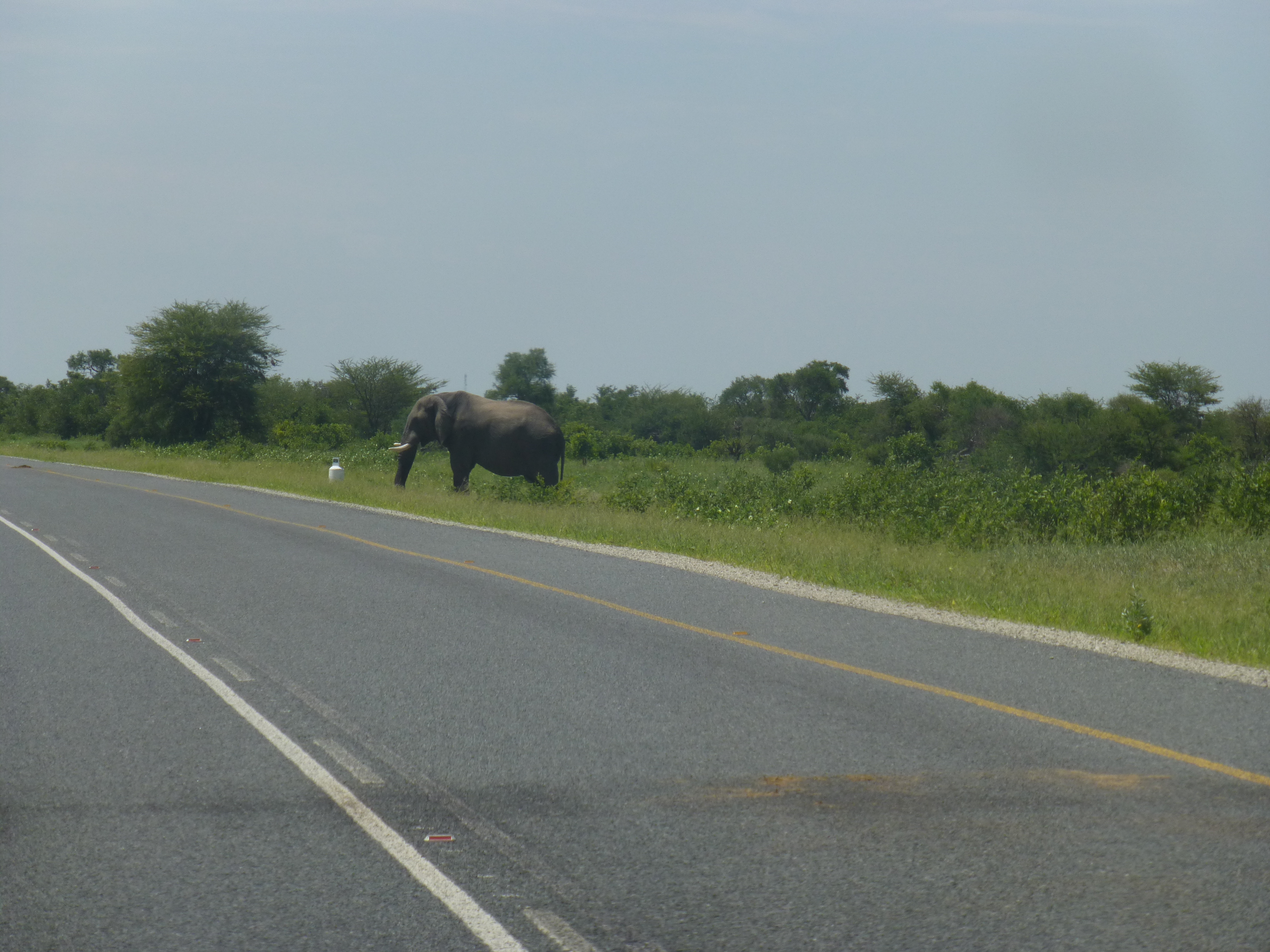
 singly close to the spectacular Victoria Falls. However, we would have to leave that adventure for another day. As we made our way towards the northeasternmost tip of Botswana, where it meets with Namibia, Zambia and Zimbabwe, the town of Kasane came into view. Ambling pedestrians, all manner of goods being carried on heads and in arms, made their way about their business. Barefooted children played happily by the roadside. Tourists sporting large-lensed cameras, binoculars and wide-brimmed hats clung to off road safari trucks as they headed off for their evening game drives. International freight lorries from neighbouring nations rumbled through the town. Goats and chickens competed with warthogs and vervet monkeys for a piece of vegetation and scraps of whatever food had been discarded by passers-by.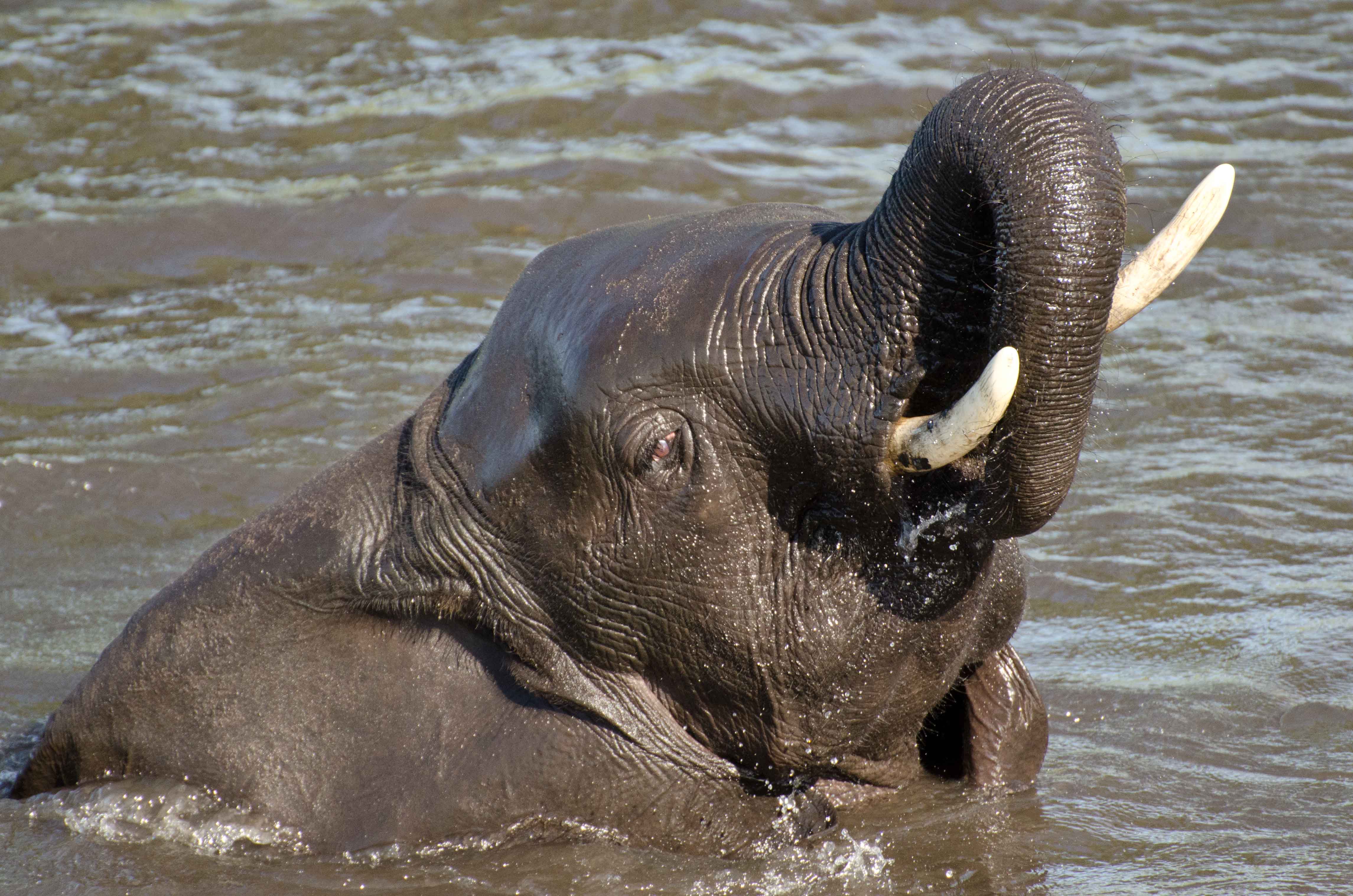
 pen 24 hours a day, this cramped, single storey building serves Shoshong’s population of over 7500. Here, they care for the diseased and the sick with a team of committed nurses and Dr Moshimbi, a smiling, genial man in his early sixties, to whom the poorly come in hope of relief from their suffering.
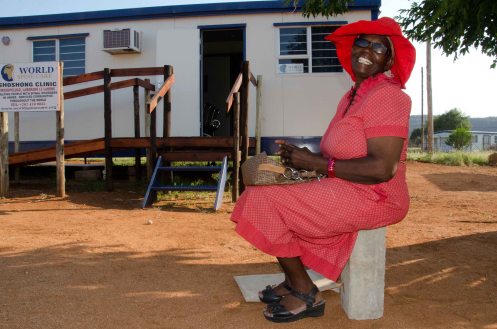 ek, we encountered a sight that will remain one of the lasting images of World Spine Care. Outside the clinic, in the shade of the old acacia tree, sat my first patient. Hands clasped in front of her, and displaying an enviable sitting posture, she rested on a grey, upturned concrete building block,
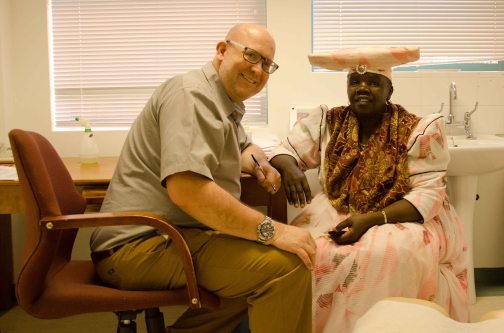 onal dress of the Herero tribe of Namibia, formerly known as South West Africa. Victims of terrible oppression and slaughter under German occupation, men and women began dressing in the style of their oppressors once occupation ended in 1915. Women in particular adopted the styles, airs and graces of the Christian missionary women that accompanied the European colonisers.Today, the dress is worn by the Herero tribes people as a permanent tribute to those who perished during the 1880s and 1890s.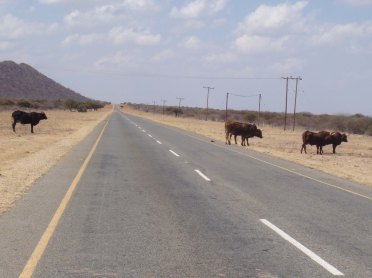
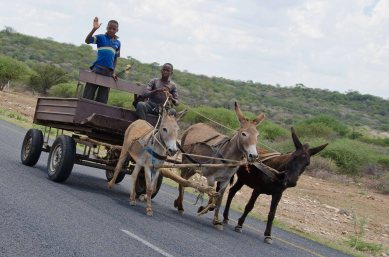 made their way to school. Accompanying them were their parents, gripping colourful umbrellas to shield their skin from the early morning sun as they coaxed their small charges into the playground. A hundred yards further on, an fascinating mix of dust-covered buses and coaches stood ready to transport their passengers to work in neighbouring towns and villages.
 (
( have prepared me for the rush of emotions that Shoshong delivered on that first day. Each subsequent clinic session has provided yet more. The first patients of the day still gather under the tree. Animated conversations conducted in Setswana continue to fill the air. The sun still beats down.

 Spinal Universe